Lola Morgan examines how a more diversified workforce is helping to preserve traditional boatbuilding skills and techniques
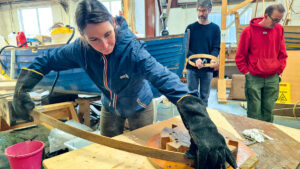
Boatbuilding has rarely been tidy, glamorous or theoretical. It’s about getting things fair, understanding loads, choosing the right timber and knowing what will still work when a boat is cold, wet and moving. Those practical skills are under increasing pressure – not because boats no longer need them, but because fewer people are being trained to carry them on.
However, over the past few years a quiet shift has been taking place in yards, workshops and training schools across the UK. More women are entering boat construction, restoration and marine trades to learn the craft properly and work within established methods and for respected companies. For everyday boat owners, that shift matters, because skills preserved, shared and expanded are skills that keep boats working.
I’ve worked at Swallow Yachts for over five years, starting as a trainee boatbuilder before moving into rigging. The yard sits across the river from where I grew up in West Wales, and the work brought together a love of the sea with my background in sculpture.
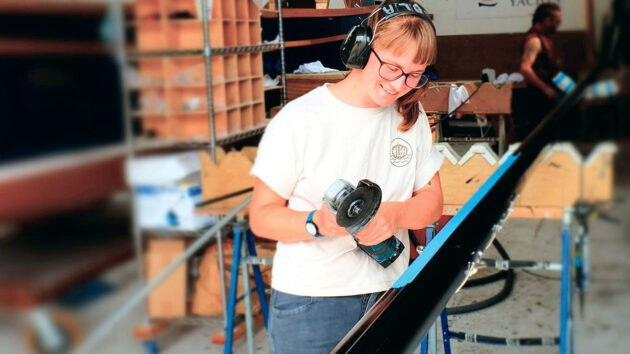
Lola Morgan began at Swallow Yachts as a trainee boatbuilder before becoming the yard’s rigger. Credit: Lola Morgan
As I became more established, I began looking for other women working in boatbuilding. That search led me to Abbey Molyneux, who now runs her own yard in Reedham and to Women in Boat Building, a community that started online, founded by Belinda Joslin, who independently built this thriving global group.
This article draws on that experience, and on conversations with women working across the trade, to explore why these skills matter – and why their future is relevant to every boat owner.
For boat owners, the consequences of skill shortages are already visible. Longer lead times for repairs, rising labour costs and a shrinking pool of specialists able to work confidently on wooden structures all affect the viability of owning and maintaining traditionally-built boats. When fewer people understand how older boats were constructed, owners are more likely to be advised towards replacement rather than repair.
This matters particularly for wooden and traditionally-built craft, where sympathetic maintenance relies on knowledge passed down through practice rather than manuals alone. Understanding how loads move through a hull, how timber behaves over time, and when original material can be retained rather than replaced is central to keeping these boats both safe and authentic.
The changing demographic in boatbuilding
At the Boat Building Academy the most recent intake enrolled more women than men for the first time in its history. The increase in women entering training and yard work contributes to a broader skills base at a time when it is badly needed. More trained hands means more continuity, more opportunity for knowledge transfer, and greater resilience within the trade.
For owners, that translates directly into better access to skilled work and more informed conversations about repair options. In that sense, who learns to build boats matters less than the fact that the knowledge itself survives. Expanding access to the trade strengthens the craft as a whole, and helps ensure that practical boatbuilding skills remain available to those who depend on them.
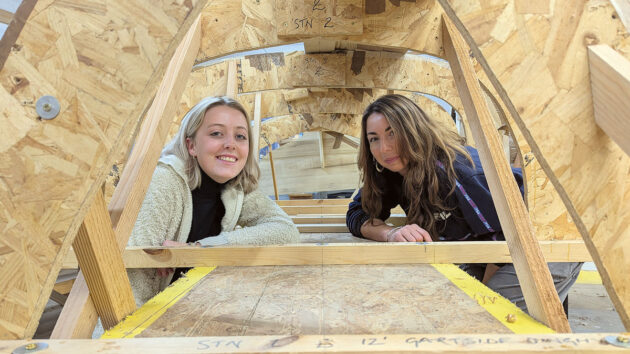
Recently, women outnumbered men on the Boat Building Academy’s 40-week boatbuilding course. Credit: Debbie Granville
There’s no single route into boatbuilding. Some women arrive via lifelong boating, others through woodworking, engineering, apprenticeships or a complete career change. What links many of these paths is a progression from initial curiosity to professional competence, often rooted in hands-on problem solving rather than formal titles.
Many start exactly where boat owners do: by fixing something themselves. A leaking fitting, ageing timber around a chainplate, a tired mast step or a soft cockpit sole becomes the catalyst.
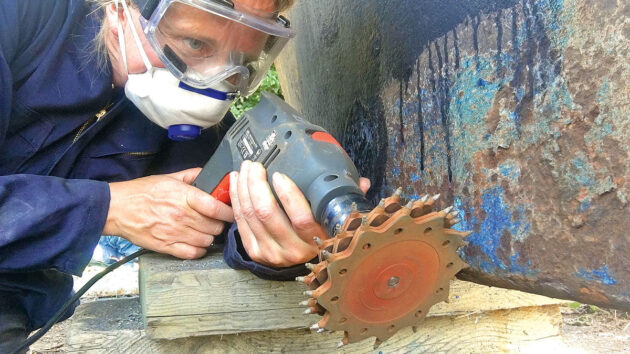
Many begin their boatbuilding careers by fixing problems on their own boat first. Credit: Ali Wood
Blogs and first-hand accounts increasingly document this process in detail, from early uncertainty through to complex repairs, structural work and professional yard practice. What stands out is not novelty, but persistence – learning by doing, asking questions, seeking advice, and slowly building confidence through repetition.
Skills handed down
These accounts mirror how practical boating skills have always been passed on. Small jobs lead to bigger ones. A repair prompts research, which leads to a better understanding of materials, loads and construction methods. Confidence comes not from speed, but from accuracy and judgement – knowing when something is sound and when it isn’t.
For Practical Boat Owner readers accustomed to maintaining their own boats, this approach will feel immediately familiar. Alongside informal learning, formal training now plays a growing role. Courses cover traditional clinker and carvel construction alongside cold-moulding, epoxy techniques, systems installation and repair work.
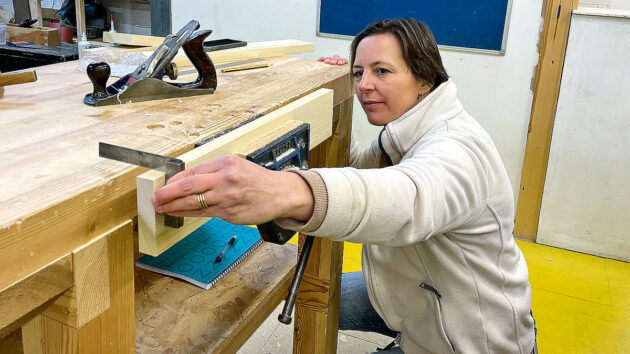
Making courses easily accessible helps attract and keep people in boatbuilding. Credit: Ali Wood
Many women entering training do so with a clear aim: to understand boats properly, whether for professional work or to deepen their own ownership knowledge. Recent intakes show a steady rise in women enrolling, reflecting both increased visibility and a recognition that these skills remain relevant.
Restoration work is often a common entry point. Older wooden boats demand patience, problem-solving and respect for original methods – skills that transfer directly to new builds and major repairs.
For owners, this matters. The same people learning to repair ribs, replace planking or scarf in new timber are contributing to a skills base that keeps traditional boats viable, serviceable and affordable to maintain.
Whether through self-led projects, apprenticeships or formal courses, the routes may differ, but the outcome is the same: more people capable of understanding how boats are built, and how to keep them afloat.
Workshop environment
Women in Boat Building (WiBB) is a UK-based community interest company (CIC) supporting women working in or entering boatbuilding and marine trades. The mission focuses on access, visibility, support and shared experience whilst offering community.
In practical terms, this means building networks where women can connect, share knowledge, and gain confidence through representation and mutual encouragement in boatbuilding environments that may otherwise feel inaccessible or intimidating. Regular online socials allow people to share stories, opportunities and events, strengthening community bonds and enabling collaboration. Informal mentoring, peer support and the visible presence of women working competently in yards and workshops help to normalise participation and reduce barriers.
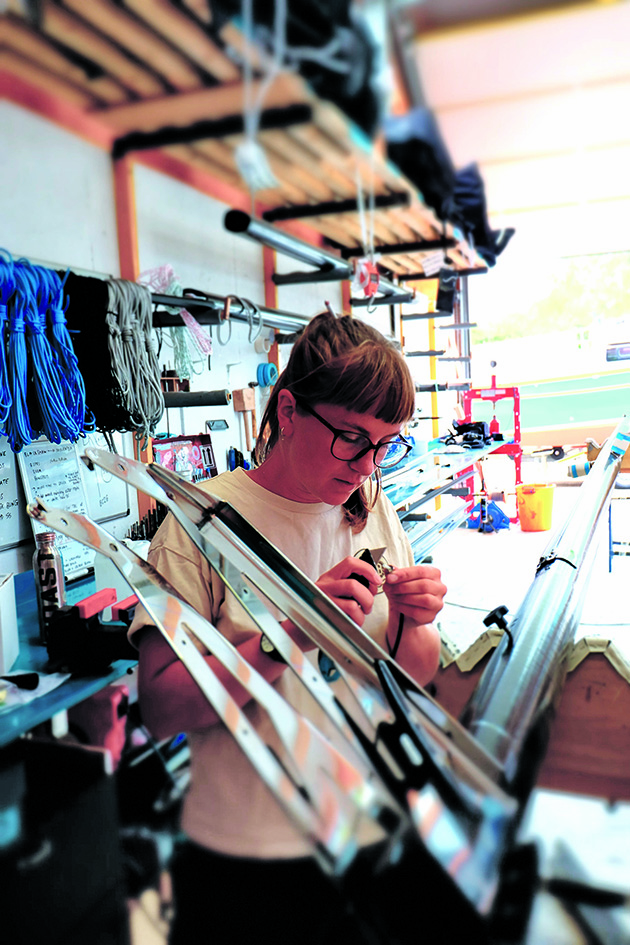
Making sure skilled workers progress in their trade is vital to ensure they stay. Credit: Lola Morgan
Empowerment in boatbuilding doesn’t come from being told you belong there; it comes from seeing people like you succeed, sharing practical knowledge, and trusting your own abilities. Restoration work demands problem solving and patience, skills that transfer into new builds and major repairs. The easier the access, the easier it is for girls and women to see practical marine trades as an option rather than an exception.
Early access matters. Being welcomed into conversations, encouraged to ask questions, and supported without fear of judgement can shape whether someone stays in the craft long term. This applies to adult entrants and younger people. Many who come to boatbuilding later in life bring valuable skills from other industries, like project planning, that translate directly once given the chance.
Preserving knowledge
For the wider boating world, these initiatives quietly strengthen the skills pipeline. They help ensure that practical knowledge isn’t lost between generations, and that more people are capable of maintaining, repairing and understanding the boats they care for. That continuity benefits owners as much as builders.
For the first time in 2025, the Southampton Boat Show hosted a Wooden Boat Stage, which offered demonstrations of traditional and modern skills – steam bending, joinery, rope making, modern splicing, oar making and repair – within a modern boating context.
It showed that wooden boats remain relevant, adaptable and practical, supported by skills that are not disappearing but expanding and being taken on by daughters, mothers, sisters and beyond.
Boatbuilding is still widely seen as physically demanding and, by extension, inaccessible to many people. The image persists of heavy timbers, awkward loads and long hours of hard labour. In practice, while the work is undoubtedly physical, accuracy, planning and problem-solving matter far more than brute strength.
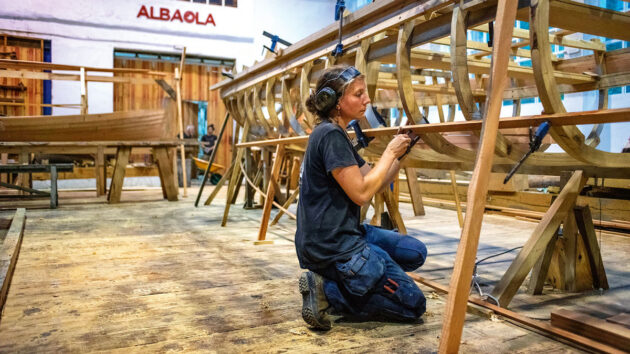
Boatbuilding is about understanding how wood behaves, accuracy, planning and problem-solving. Credit: Getty
Modern yards rely on jigs, hoists, mechanical advantage and careful sequencing of work. Traditional techniques themselves are often about working with materials rather than against them – understanding grain direction, moisture content and load paths so that timber behaves predictably. These are skills learned through experience and instruction, not raw force.
Another common assumption is that boatbuilding knowledge is closed or difficult to access without long family connections to the trade. While that may once have been true, the reality is changing. Training routes are more visible, short courses and apprenticeships are better signposted, and online resources now complement hands-on learning. Blogs, forums and long-form documentation of restoration projects have made once-opaque processes more transparent, allowing newcomers to build understanding before ever stepping into a workshop.
That said, challenges remain. Early confidence can be a barrier, particularly in environments where few women are visible. Entering a yard or workshop for the first time can be intimidating for anyone without prior experience, regardless of ability. This is where structured support, mentoring and inclusive training environments make a tangible difference – not by lowering standards, but by making pathways clearer.
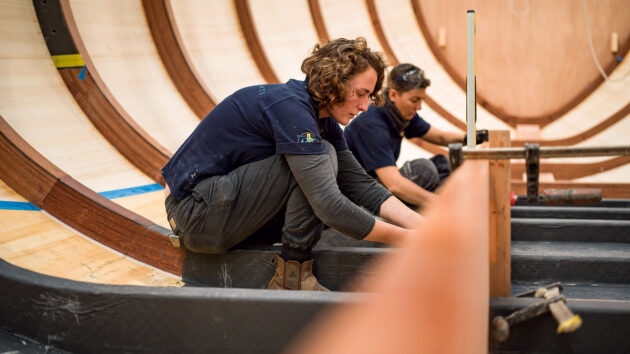
To preserve the boatbuilding industry, a more diverse and better-trained workforce is needed. Yards like Spirit Yachts are already realising this. Credit: Spirit Yachts/Waterline Media
Retention is another issue. Boatbuilding requires patience, resilience and long-term commitment. Like many trades, it can struggle to hold onto skilled people if progression feels unclear or insecure. Addressing this benefits everyone in the industry, not just women. Clearer career paths, realistic pay structures and recognition of skilled workmanship all contribute to a healthier trade overall.
Importantly, the presence of more women in yards has begun to challenge assumptions; competence speaks for itself. As more women complete formal training, gain yard experience and run their own yards, perceptions shift through demonstrated competence rather than argument. For owners commissioning work, the quality of the result quickly outweighs any preconception about who carried it out.
The reality, then, is not one of sudden transformation but steady adjustment. Skills are being passed on. Methods are evolving. The trade remains demanding, but increasingly open. For boat owners, that gradual change strengthens the network of people capable of keeping boats seaworthy, and that is something worth paying attention to.
The future
Looking ahead, the gradual broadening of who enters boatbuilding has clear implications for owners. A more diverse and better-trained workforce brings greater resilience to the trade, helping ensure that traditional skills remain available rather than becoming specialist rarities.
For wooden-boat owners in particular, this matters. Boats designed to last need to be repaired and rely on people who understand not only modern materials but also historical construction methods and the logic behind them. Maintaining that knowledge base keeps restoration viable and prevents older boats from being priced out of practicality.
There is also a wider cultural benefit. Encouraging girls and women to develop practical skills early – to work with their hands, understand materials and gain confidence with tools – strengthens the future of all craft-based trades. Boatbuilding becomes visible not as an eccentric niche, but as a skilled, creative and sustainable occupation.
The long-term aim is not to frame boatbuilding in terms of gender at all. It is to reach a point where anyone with the aptitude, patience and interest can see a place for themselves in the trade.
When that happens, the conversation shifts away from who is allowed in and back to what really matters: the quality of the work, the durability of the boats, and the skills that keep them afloat.
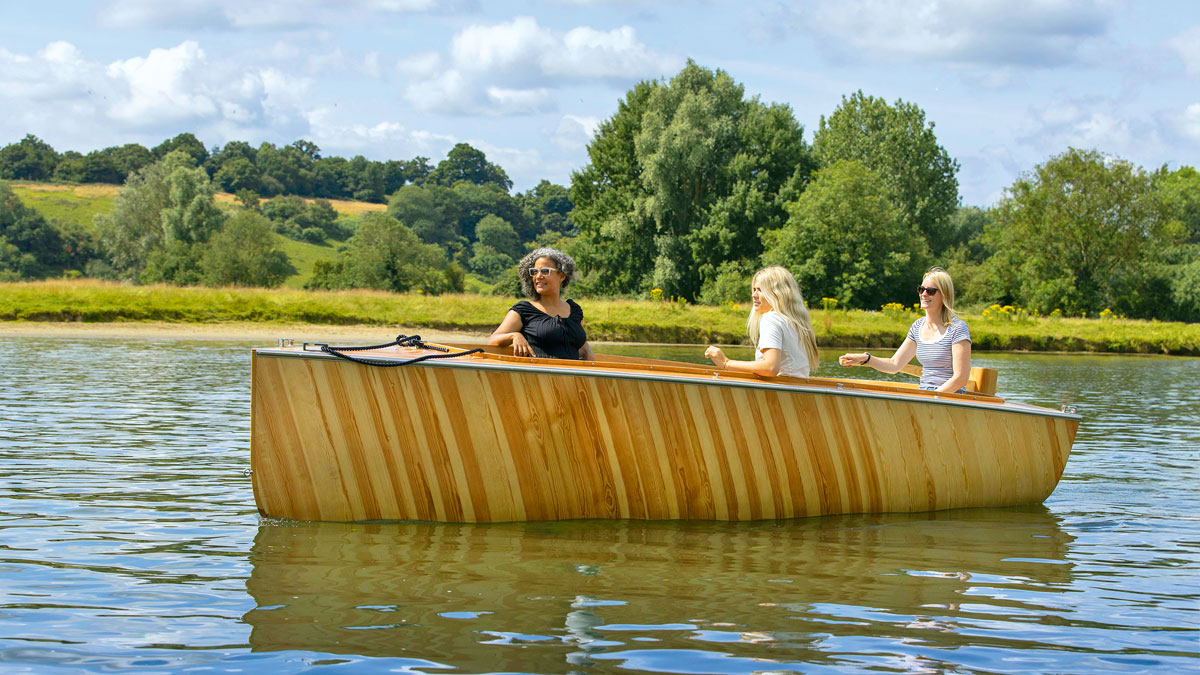
Fit for the future: the pioneering boat by BlueTree
Annie Means talks to the founders of BlueTree about their innovative approach to boatbuilding design and construction

Restoring Tethra: how a Looe fishing boat became a dining sensation
Annie Means talks to the owners and restorers of a Cornish motor luanch which is now used for dining afloat
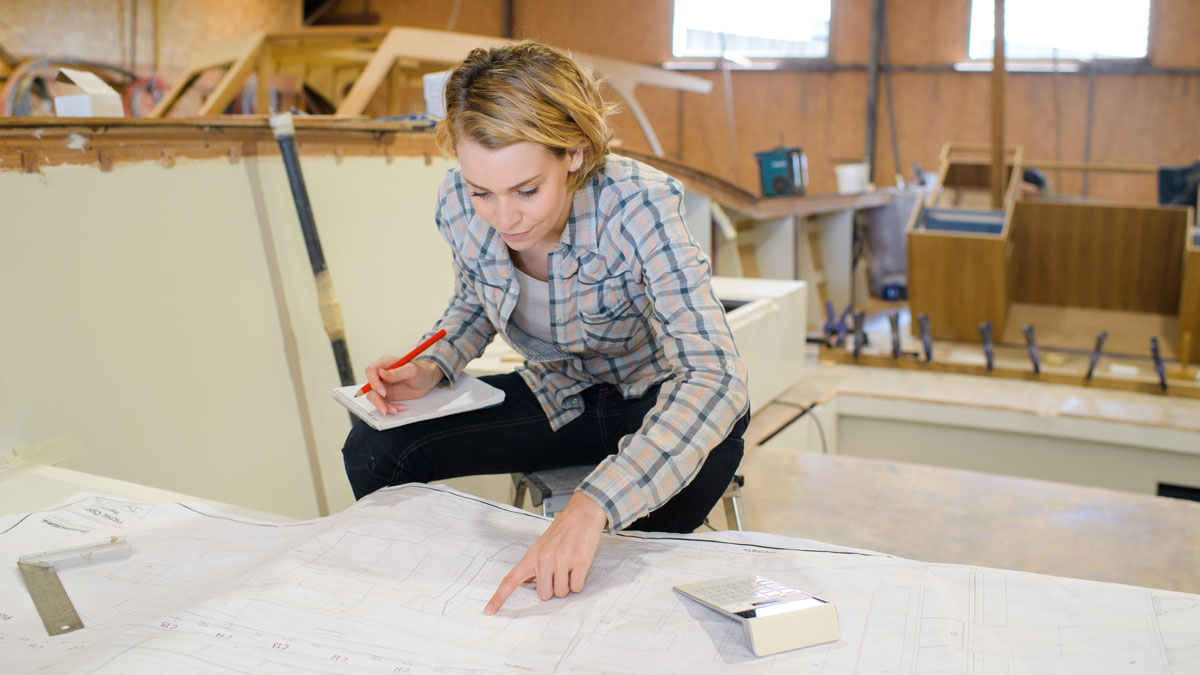
New mentoring programme for women boatbuilders
10 boatbuilders are being given the opportunity to be matched and mentored by women working in the industry in a…

Hanneke Boon: Life after Wharram
Ali Wood learns how a shy 19-year-old – one of James Wharram’s ‘five girls’ – became a designer, skipper and…
A subscription to Practical Boat Owner magazine costs around 40% less than the cover price.
Print and digital editions are available through Magazines Direct – where you can also find the latest deals.
PBO is packed with information to help you get the most from boat ownership – whether sail or power.
-
-
-
- Take your DIY skills to the next level with trusted advice on boat maintenance and repairs
- Impartial, in-depth gear reviews
- Practical cruising tips for making the most of your time afloat
-
-
Follow us on Facebook, Instagram, TikTok and Twitter
Leave a Reply