Overproduction, underuse and the disposal difficulty of sports apparel, including the technical challenge of marine garments, are to be tackled in the UK.
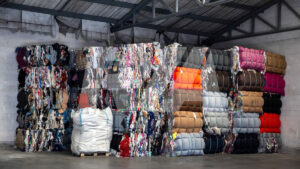
The Royal Yachting Association (RYA) has joined the inaugural Sustainable Sports Apparel Charter, launched by 5Thread and a working group collaboration that includes the British Mountaineering Council, British Gymnastics, British Triathlon and ParalympicsGB.
The global textile industry accounts for up to 10% of global emissions and generates around 92 million tonnes of waste annually.
Sports apparel operates under additional performance, sponsorship and branding pressures.
In 2024, eight UK high-performance sports organisations procured 88,000-plus items of apparel.
RYA sustainability manager Kate Fortnam said: “It has also been a privilege to collaborate with colleagues from other leading sporting organisations and national governing bodies and we recognise that there is still much more to learn.”
She pledged to ‘share insights with the boating community.’
Structured around seven focus areas and 15 practical commitments, the charter, which costs £625 to join or £250 for organisations ‘preparing for full signatory status’ is designed to support organisations to reduce waste, extend product life, embed sustainability into tenders and share learnings.
‘Major problem’ of sports clothing overproduction
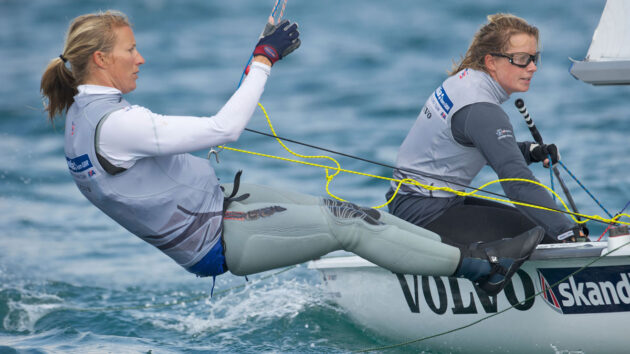
Industry pressures of sponsorship and branding often result in extra sports clothing waste. Credit: Peter Llewellyn/Alamy
5Thread chief executive officer Joanna Czutkowna told PBO: “Overproduction is a major problem.
“Brands continue producing new garments every season, driving consumption and creating surplus stock and waste due to inaccurate forecasting and manufacturing efficiencies, where producing higher volumes reduces unit costs.
“While recycled materials are positive, we must also address volume, particularly as many of these products are never purchased and are destroyed without ever being worn.
“The current model is still built around selling more products more frequently, rather than designing for longevity, reuse or repair.
“To create real change, the industry must rethink not only what products are made from, but also how it can transition towards more circular business models that create new revenue streams.”
What do the marine brands say?

Gill’s hydrostatic machine is one of its longevity test tools. Credit: www.gillmarine.com
British clothing brand Henri-Lloyd’s head of product and supply chain, Kim Ramsay, said: “Since Spring/Summer 25, Henri-Lloyd has eliminated the intentional use of PFAS chemistry across all new waterproof product development, with all new styles using C0 PFAS-free Durable Water Repellent (DWR) treatments.
“PFAS are often referred to as “forever chemicals” because they do not break down naturally and are increasingly being phased out due to environmental and health concerns, with traces now found globally from our oceans to remote locations such as Mount Everest Base Camp.
“This transition has been a key focus of our development programme, particularly in lightweight and highly breathable waterproof garments where performance requirements are demanding.
“A small number of carryover styles, originally developed prior to this transition, were continued into SS25 on existing specifications. These are now being updated, with all new production moving to PFAS-free alternatives.
“Today, all current waterproof development, including Ocean Pro, Dynamic, Mav Lite, Biscay, Sail & Breeze, is built on PFAS-free fabric platforms, with legacy specifications being phased out as part of the normal product lifecycle.
“While the industry is still in transition, our focus has been on implementing PFAS-free solutions early and being transparent about our progress.”
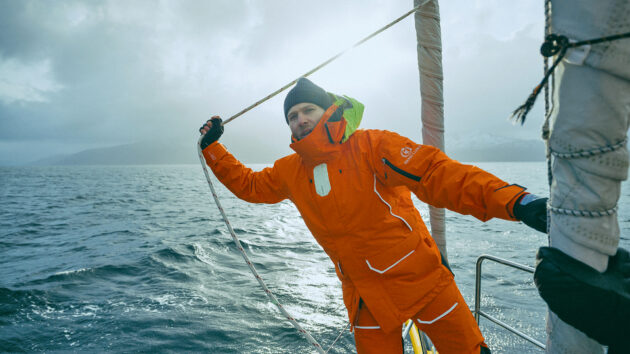
Since last year, all new waterproof development across Henri-Lloyd’s sports clothing has moved to per- and poly-fluoroalkyl substance (PFAS)-free durable water repellent treatments, alongside perfluorooctanoic acid-free membranes and components. Credit: Henri Lloyd
Gill Marine UK has an in-house repair service accessed via its customer service team, while Henri-Lloyd and Musto are both supported by Scottish Mountain Gear’s Gore-Tex-approved centre for repairs, alterations and re-proofing.
Ramsay added: “Repair has been part of the Henri-Lloyd approach for over 30 years, grounded in extending product life and reducing unnecessary replacement.
“We actively encourage customers to get in touch with any repair enquiries, and work to find the most appropriate solution for each garment on a case-by-case basis.
“In parallel, we are developing a more structured, global repair and care programme with new partners to support our products over their full lifecycle.”
Industry accountability

Henri-Lloyd has partnered with Scottish Mountain Gear’s Gore-Tex for its UK repairs, alterations and re-proofing
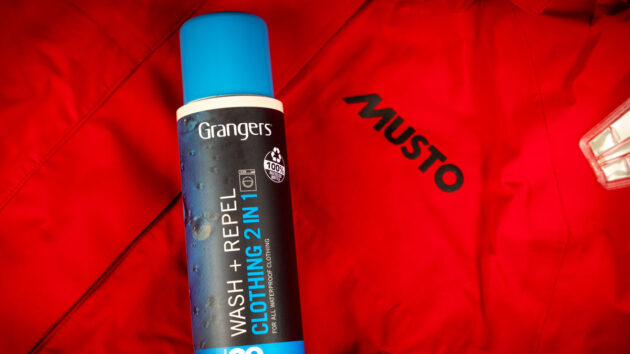
Musto recommends washing sports clothing after exposure to dirt, sweat, or salt water, following the care label; then, after washing, always reactivate any durable water repellent coating with heat (i.e. tumble dry on a low heat for 20 minutes or line dry, then iron with a warm iron)
Musto product director, Chris Holliman, believes industry-wide accountability is “essential if we’re to make real progress”.
He said: “As an official partner of the RYA, we welcome their commitment to the Sustainable Sports Apparel Charter – it reflects the kind of industry-wide accountability that’s essential if we’re to make real progress.
“Circularity is central to how we’re rethinking design – from the raw materials we specify to how a garment can be repaired, reused, or responsibly recovered at end of life.
“At Musto we are targeting 80% Bluesign-certified products and full material traceability by 2028, and we conduct regular audits across our supply chain using recognised standards including Higg and Amfori BSCI.”
Holliman added: “We won’t pretend there aren’t challenges.
“High-performance waterproof garments place unique demands on materials, and transitioning away from certain chemicals and synthetic fabrics without compromising safety at sea takes time and genuine technical innovation.
“That’s why we’ve set clear, science-aligned targets: reducing greenhouse gas emissions by 42% by 2030 in line with the Paris Agreement, transitioning to 100% recycled polyester and polyamide, and 100% organic cotton by the same date.
“Seasonal collections will always be part of the apparel industry, but we believe longevity and performance are themselves sustainability credentials – a garment built to last five seasons on the water is a garment that doesn’t need replacing.
“We’re committed to backing that up with transparency, measurable targets, and continuous improvement across our entire ESG framework.”
Reducing reliance on conventional petrochemical materials in sports clothing

Gill Marine has teamed up with Nikwax and encourages customers to re-proof garments to be waterproof again. Credit: www.gillmarine.com
Product development and sustainability director at Gill Marine, Matt Clark, agrees “over-production and short product lifecycles are key contributors” to waste.
He told PBO: “The pressure within the broader apparel industry to introduce new products every season can encourage unnecessary consumption, despite many garments being designed to perform for years.
“For us, sustainability starts with designing products that last longer, perform reliably throughout their lifetime, and can be repaired and maintained rather than replaced prematurely.
“This philosophy underpins several initiatives already underway at Gill. We operate an in-house repair facility to help extend the usable life of garments, reducing waste and keeping products in use for longer.
“We’ve already moved to using PFAS-free fabric technologies across our collection and are increasingly incorporating post-consumer recycled yarns into our product ranges where performance standards allow.
“Packaging also uses recycled and recyclable content, and for many products we’ve eliminated the use of plastic packaging altogether.”
Extending use
Clark added: “A major focus for Gill is ensuring long-term durability and waterproof integrity.
“Our in-house testing laboratory rigorously tests every waterproof garment before launch, assessing performance pre-wash, post-wash and after artificial ageing to ensure products continue to perform over extended use.
“By validating durability throughout a garment’s lifecycle, we aim to reduce unnecessary replacement and build greater consumer confidence in long-lasting products.
“Alongside this, we’ve introduced a neoprene-free BIO Foam developed using natural rubber alternatives, helping reduce reliance on conventional petrochemical materials.
“We’ve also developed a partnership with Nikwax to integrate their PFAS-free waterproofing technology into more Gill garments, while encouraging customers to properly care for and reproof products to extend their lifespan further.
“Technical marine apparel presents unique sustainability challenges due to the extreme environment’s these products are designed for, but we believe the solution lies in balancing performance with longevity, repairability and more responsible material innovation.”
Does your organisation reuse, repair or upcycle sports clothing?
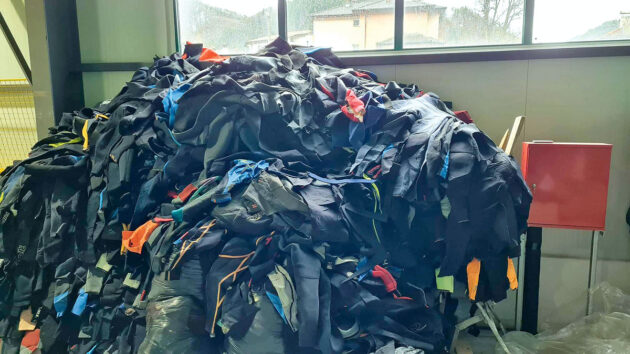
The resailbycleansailors.com platform is among the sports clothing reuse enablers; the charter wants to discover more. Credit: Circular Flow
In addition to waste, the 5Thread charter addresses cost barriers to participation.
Research shows that 87% of families experience financial pressure linked to sports apparel, while surplus kit can remain unused within sports organisations.
By prioritising reuse, this apparel can reach communities instead of being stored or going to landfill, reducing financial barriers to taking part.
5Thread CEO Joanna Czutkowna said: “Within the marine industry, technical performance has rightly driven product design, but it also creates a sustainability challenge.
“Garments are built to withstand extreme conditions, often using synthetic materials and coatings that add complexity to recycling.
“However, this also means these products are highly durable, creating real potential to extend their lifespan.”
Organisations facilitating the upcycling, repair or reuse of sports clothing or equipment at any scale, are asked to fill in a form at charter.5thread.com
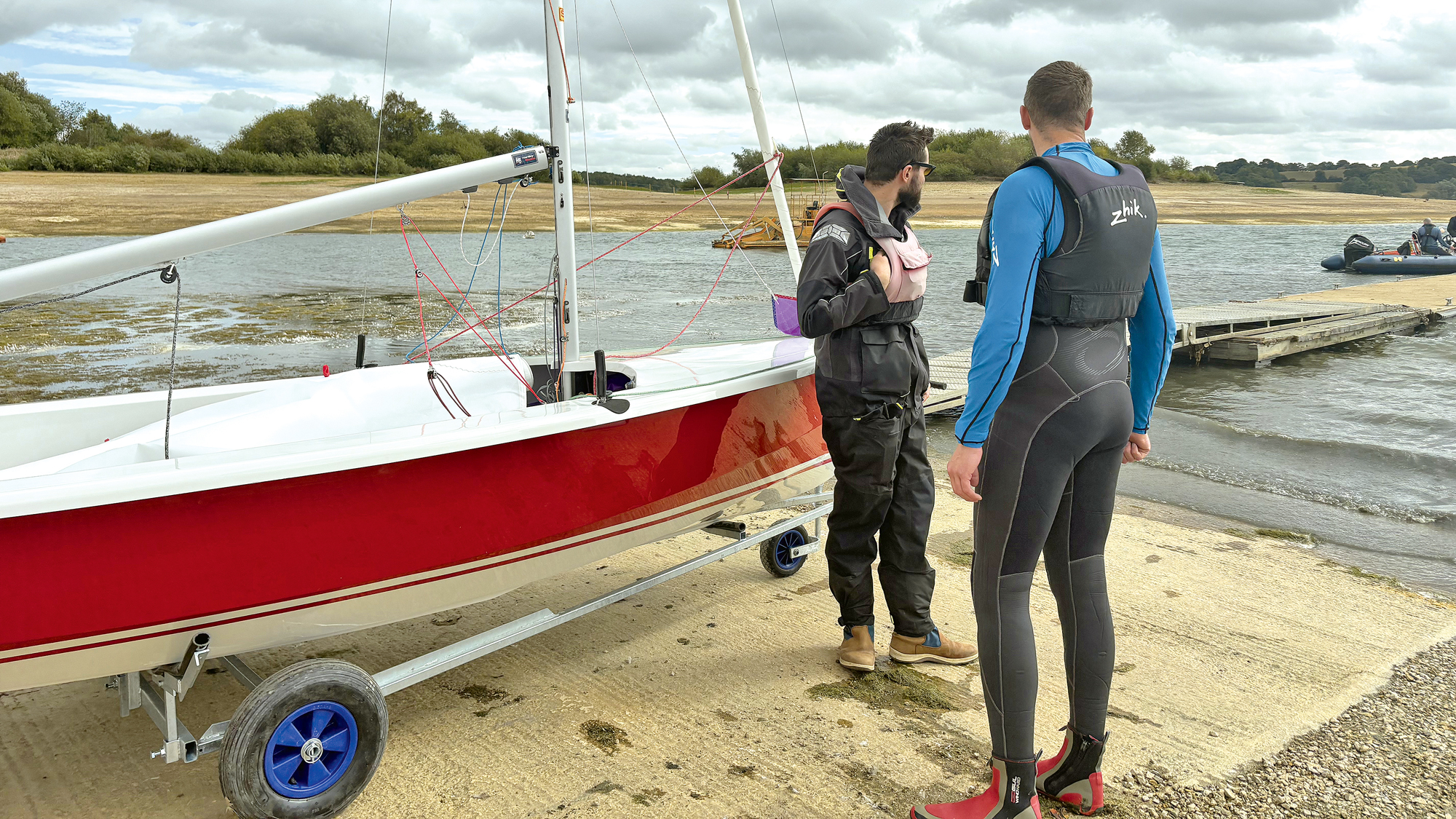
Your complete guide to what to wear dinghy sailing
From base layers to life jackets to your hands and feet, this helpful guide from PBO’s Ali Wood explains what…

Where to recycle old sails and end of life kit – drop off points across the UK and Europe
Got old sails and old rope that you don’t want to put into landfill? The ReSail platform allows sailors to…

The proposed PFAS ban and the implications for the marine industry
Both the European Chemicals Agency and the UK’s Health and Safety Executive are examining proposals to ban the use of…
What to read more features like Charter to tackle sports clothing impact?
A subscription to Practical Boat Owner magazine costs around 40% less than the cover price.
Print and digital editions are available through Magazines Direct – where you can also find the latest deals.
PBO is packed with information to help you get the most from boat ownership – whether sail or power.
-
-
-
- Take your DIY skills to the next level with trusted advice on boat maintenance and repairs
- Impartial, in-depth gear reviews
- Practical cruising tips for making the most of your time afloat
-
-
Follow us on Facebook, Instagram, TikTok and X